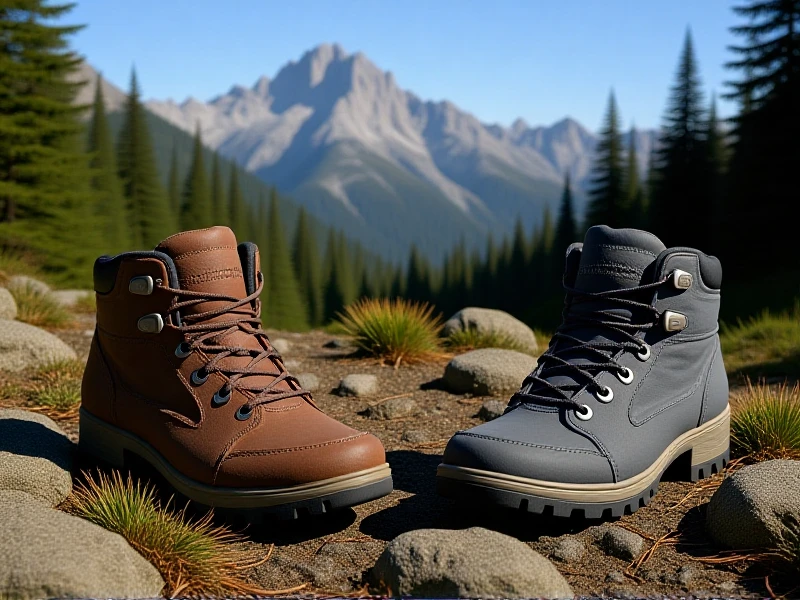
The Ultimate Guide to Choosing High-Performance Mountaineering Boots
Ready for your next peak? Proper mountaineering boots aren't just footwear; they're your critical foundation for safety and success in the high mountains. Choosing the right pair directly impacts your comfort, stamina, and confidence on technical terrain. Forget about ordinary hiking boots - true Mountaineering Boots are engineered for harsh, demanding alpine environments.
Why Dedicated Mountain Boots Are Essential
Mountaineering requires navigating rock, ice, snow, and steep slopes, often with a heavy pack. Your boots provide vital ankle support to prevent twists on uneven ground and must withstand extreme abrasion. Crucially, they integrate rigid soles designed for securely attaching crampons – an absolute necessity for glacier travel or icy ascents. This rigidity transmits power efficiently, saving energy during prolonged climbs on steep snow or ice.
Key Features of Top Mountaineering Boots
- Waterproof & Breathable Membranes: Look for proven technologies like Gore-Tex®. Keeping feet dry from external snowmelt while allowing internal sweat vapor to escape prevents debilitating blisters and cold feet.
- Insulation: Vital for high altitudes and cold conditions. Synthetic Thinsulate™ or Primaloft® insulation provides warmth without excessive bulk. Consider boot temperature ratings aligning with your objectives. Removable liners offer versatility, simplifying drying.
- Upper Construction: High-quality waterproof leather (like nubuck or full-grain) or durable synthetic blends dominate. Robust materials offer longevity and protection against scree and rock abrasion.
- Stiff, Supportive Sole Units (Midsole & Outsole): A stiff midsole underfoot is non-negotiable for edging on rock and providing a stable, torsion-resistant platform for crampons. Outsoles feature aggressive multi-directional lugs made of sticky rubber compounds like Vibram®. Vibram® Arctic Grip technology offers exceptional traction on wet ice, vital for safety.
- Crampon Compatibility: Most mountain boots feature B-rated (semi-automatic/heavy-duty) or B3-rated (fully automatic/triple) welts at heel and toe to securely interface with technical crampons. Ensure compatibility.
- Ankle Support & Fit: High, stiff ankle collars stabilize ankles across traverses. A precise, snug heel pocket is crucial without constricting width. Room for toe wiggle prevents bruising on descents. Always try boots on with the socks you intend to climb in!
Finding Your Perfect Fit (The Non-Negotiable!)
Never compromise on fit. Visit a specialized outdoor retailer for professional fitting, ideally in the afternoon when feet are slightly swollen. Consider:
- Sock Thickness: Wear your intended mountaineering socks.
- Swelling: Feet swell significantly at altitude.
- Toe Room: A thumb’s width between big toe and boot end when standing hard is essential. Heels must lift minimally when walking.
- Break-In: Quality mountaineering footwear requires careful breaking in before your expedition. Do numerous walks, wear them indoors aggressively.
Investing in Performance & Safety
High-altitude Mountaineering Boots represent a significant investment but are fundamental to successful and safe ascents. Compromising on footwear compromises your entire climb. Research rigorously, prioritize fit above all else, and ensure your chosen boots meet the technical demands of your peak goals. Protect your foundation – it carries you to the summit!